About me
13+ years connecting technology, business, and delivery.
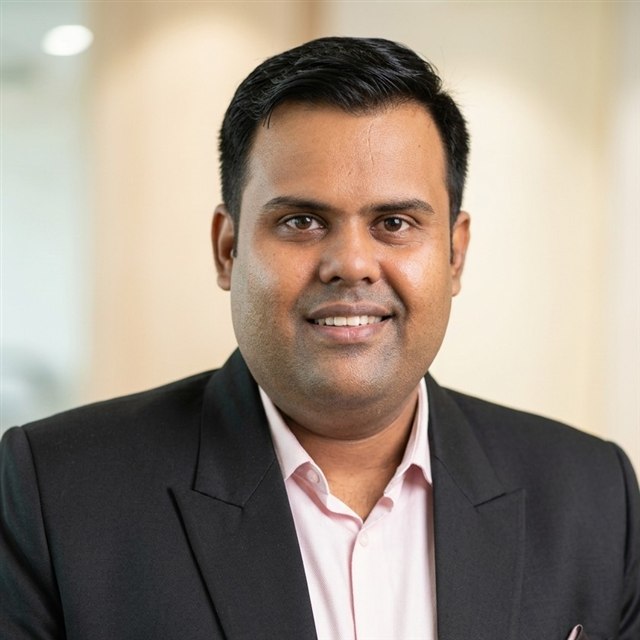
An IIT Bombay MBA and Product Owner in digital payments, currently leading wallet-provisioning and card-migration work that connects a major US card network to Google Pay and Samsung Pay. My path has moved between engineering, pre-sales, and delivery — and outside the day job, I direct Claude Code to build rigorously engineered AI systems solo. The case studies on this site cover both: real payments delivery at work, and two AI systems shipped solo outside it.
13+
Years of experience
4
Career chapters
IITB
MBA, 2014
>$100M
Proposal TCV won
Career timeline
Four chapters, one thread
May 2022 – Present
Cognizant Technology Solutions
Onsite Delivery Manager & Proxy PO → Product Owner
Moved onsite to the UK, then into the Product Owner role outright.
- Virtual Card autofill retrieval flow: 275,000+ requests in 60 days; Star Award – Excellence in Delivery (2024)
- Now leading Google Pay & Samsung Pay wallet-provisioning for a card migration programme
May 2014 – Apr 2022
Cognizant Technology Solutions
Presales Consultant → Business Analyst & Test Lead → Pre-Sales Lead → Pre-Sales Solution Architect
Nearly eight years across pre-sales and delivery in banking & financial services.
- Led a 10-engineer QA team through a major network upgrade, including new tokenisation capabilities
- Owned the full bid lifecycle — RFP/RFI to commercial modelling — across banking & financial services
- Won proposals totalling >$100M TCV across DevOps, test automation, and QE programmes
2012 – 2014
SJMSOM, IIT Bombay
M.Mgmt. (MBA equivalent)
Business strategy, operations, and commercial decision-making — GPA 8.38/10.0.
Dec 2010 – Jun 2012
Tata Consultancy Services
Software Engineer, Mumbai
Engineered enhancements to India's largest securities depository (NSDL) — dematerialisation and securities transfer modules.
Career progression
Each role added a new lens
01
Learning the mechanics of delivery
I began in enterprise IT at TCS, engineering enhancements to a national securities depository. It taught me how large, regulated organisations actually ship — the coordination, the testing discipline, and the respect for dependable systems that still shapes how I run delivery today.
02
Adding the business perspective
My MBA at IIT Bombay moved me past implementation questions to the bigger one: which problems are worth solving, how value actually gets created, and what trade-offs a business should accept. It's the lens I still reach for before writing a single acceptance criterion.
03
Shaping solutions in pre-sales
Nearly eight years in pre-sales taught me to find the real need behind a brief, align stakeholders who don't naturally agree, and win proposals — over $100M TCV worth — by making trade-offs visible instead of hiding them. That's the same instinct I now bring to backlog prioritisation.
04
Owning outcomes in delivery
Returning to delivery as a Product Owner made me accountable for outcomes, not just proposals — shipping the retrieval flow behind a virtual-card autofill feature to 275,000+ requests in its first 60 days, and now directing Claude Code to build rigorously engineered AI systems on the side. The discipline stays the same either way: define what "done" means, and don't sign off until it's actually true.
How I work
I don't start with a roadmap. I start by watching someone actually stuck — my wife re-keying figures into a spreading template by hand, working out a covenant ratio against a deadline she didn't set. Or me, rereading an email because the tracker no longer matched what was actually happening. If I can't point to a specific moment someone hit a wall, I don't trust the feature enough to build it.
None of this is a separate skill I picked up because AI is trendy, either. Writing acceptance criteria, deciding what "done" actually means, and reviewing work before it ships is what I've done for a living for years — directing Claude Code is the same discipline, pointed at a different kind of team member. The bar I'd hold a sprint deliverable to is the bar I hold an AI-generated change to. If something comes back marked "fixed," I ask what I'd ask any developer: fixed where, exactly, and is that the part that actually matters or just the part that was easy to check. Deciding what ships this week versus what gets flagged as a deliberate deferral is scope management I'd run on any programme, payments or otherwise.
That same instinct decides how much process I put around a piece of work in the first place — I go deeper on the two very different governance models I actually run on my Delivery Approach page.
What I bring
A translator and an owner
I'm most useful where the problem is ambiguous and the stakeholders are numerous and don't naturally agree — moving from a client conversation to a product decision, then staying close enough to delivery to help a team ship with clarity.
Core Skills
Next chapter
Building products that turn complexity into progress.
I'm exploring Product Manager and Product Owner roles where technical depth, commercial thinking, and hands-on delivery all matter.